Posts mit dem Label wachstumswende werden angezeigt. Alle Posts anzeigen
Posts mit dem Label wachstumswende werden angezeigt. Alle Posts anzeigen
Montag, 22. Juni 2026
Mittwoch, 29. November 2023
Literatur über degrowth
„Degrowth/Postwachstum zur Einführung“ von Andrea Vetter und Matthias Schmelzer
Jason Hickel - less is more https://www.jasonhickel.org/less-is-more
degrowth strategy - degrowth vienna
„Wie wollen wir leben? Wege aus dem Wachstumswahn“ von Tim Jackson
The case for degrowth - Kallis, Paulson, d'Alisa, Demaria
https://degrowth.info/en/library
https://www.oekom.de/beitrag/postwachstumsoekonomie-14-buchtipps-zu-degrowth-suffizienz-und-mehr-231
The Future Is Degrowth: A Guide to a World beyond Capitalism
Schmelzer, Vetter, Vansintjan
Vaclav Smil - Growth
https://www.plutobooks.com/9780745342023/exploring-degrowth/
Donnerstag, 30. März 2023
Beyond Growth 2023 Conference in Brussels
"The Beyond Growth 2023 Conference is a multi-stakeholder event aiming to discuss and co-create policies for sustainable prosperity in Europe. (...) This three days major event is a cross-party initiative of 20 Members of the European Parliament, supported by a wide-range of partner organisations. It will involve stakeholders from EU and national policymaking, academia, social partners and civil society organisations. - The conference is entirely free, to make it more accessible. - The conference also relies on participative methods. - It has 7 plenary sessions, 20 focus panels and 4 policy labs."
Location:
European Parliament; 60 rue Wiertz;
Bruxelles, Belgium
and online in livestreams
Date:
15-16-17 May 2023

Goals and Key questions, organizing and supporting partners
Speakers
Programme and schedules:
Opening plenary – Limits to Growth: where do we stand and where do we go from here?
2 – Changing the goal: from GDP growth to social prosperity
3 – Addressing the limits of resource consumption: towards a resilient economy
4 – Understanding the biophysical limits to growth to build an economy that respects planetary boundaries
5 – Building post-growth macroeconomic governance framework: aligning tools, rules and policies with EU political goals
6 – The power of economic models on decision-making and society at large
Closing plenary – Pathways from here: roadmap for a Green and Social Deal
1 – Which prosperous future? Confronting narratives of growth
2 – How to target and future-proof industrial policy towards climate neutrality?
3 – Beyond growth beyond Europe: What policies and partnerships to make it happen?
4 – Unlocking a just and sustainable economy through Universal Basic Services
5 – From the welfare state to the social-ecological state: how to organise and finance welfare without growth?
6 – Inequalities in a beyond growth perspective: taxation as an instrument of ecological and social justice
7 – Care economy: doing away with gender blind policies for a beyond growth future
8 – Cutting the addiction of labour to growth: the 4 days week
9 – Building an energy sector compatible with ecological limits
10 – Building a fair, social, green, autonomous digital future for a postgrowth economy
11 – The role of small and medium enterprises in a beyond growth economy
12 – The “Blue Doughnut”: A framework for a wellbeing ocean economy beyond growth
13 – Repairing and restoring Nature in a beyond growth perspective: is putting a price on biodiversity the right way to go?
14 – From Anthropocene to Cyclocene – Will circular economy keep us within planetary boundaries?
15 – Trade for sustainable development: how to benchmark success?
16 – Transforming food for the wellbeing of people and planet
17 – Challenges to feminist fiscal policies beyond growth: a focus on gender budgeting tools
18 – Beyond GDP indicators
19 – A financial system fit for a postgrowth economy
20 – What does a credible EU-wide, social and economic framework to achieve a just transition look like?
Dienstag, 13. September 2016
Massnahmen gegen das Massenaussterben
(betaversion-work in progress)
Eckdaten eines Szenarios des schwer kranken Planeten, betroffen von schlimmster Umweltzerstörung:
Gefährdete Arten/threatened species (IUCN Red List)
Aussterben
Massenaussterben
Umweltverschmutzung
Umweltschäden
Umweltkatastrophen
Overexploitation
Entwaldung_in_römischer_Zeit
Entwaldung
Deforestation
heutiges Massenausterben/modern extinction
NATIONAL SURVEY REVEALS BIODIVERSITY CRISIS - SCIENTIFIC EXPERTS BELIEVE WE ARE IN MIDST OF FASTEST MASS EXTINCTION IN EARTH'S HISTORY
Living Planet Report 2020 – WWF Deutschland
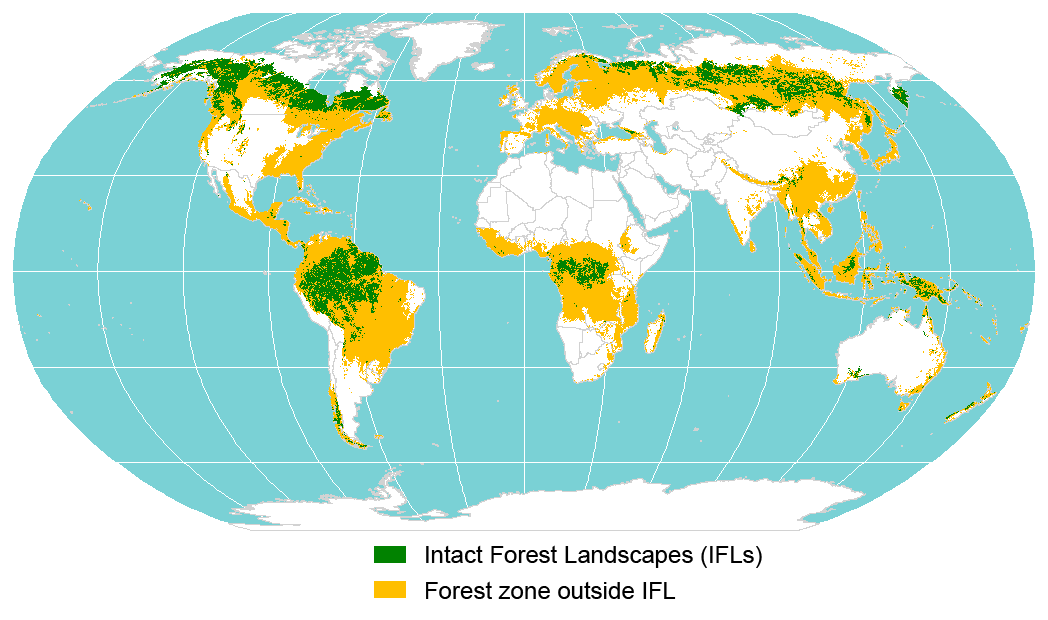 |
| Bildquelle:wikimedia bzw. https://en.wikipedia.org/wiki/Intact_forest_landscape#/media/File:Iflmap.png |

 |
| Bildquelle: abenteuer-regenwald.de wikimedia globalforestwatch |
 |
| Bildquelle:greenpeace |
Gegenmittel - Mit folgenden Methoden läßt sich die Katastrophe aufhalten:
Degrowth
Wachstumsrücknahme
Wachstumswende-Postwachstumsökonomie-Wachstumskritik
Beendet unnötige Arbeit!
https://de.wikipedia.org/wiki/Nachhaltigkeit
(Grafik, die symbolisch das schrumpfende Transformieren eines riesigen Bergs sinnloser Luxusgüter zu einer Naturidylle visualisiert)
(betaversion-work in progress)
Dienstag, 5. August 2014
Wachstumsrücknahme jetzt. Kommt zur Degrowth-Konferenz nach Leipzig.
Die Vierte Internationale Degrowth-Konferenz für ökologische Nachhaltigkeit und soziale Gerechtigkeit wird vom 2.-6. September 2014 in Leipzig stattfinden.

Warum Wachstumsrücknahme so wichtig ist, wird beim Klicken auf diesen Link erklärt: sehr viele Produkte braucht niemand; Biotope werden zerstört; unnötige Arbeit verbraucht zuviel Zeit, zerstört Wälder, rottet Spezies aus und versklavt Menschen
Das Rosenkranz-artig von realitätsfernen Politikern und Wirtschaftsbossen wiedergekäute Dogma 'Wirtschaftswachstum' stammt aus einer kranken maschinellen Logik, die seit vielen Jahrzehnten keinen Sinn mehr ergibt. Nachdem die Kritik am immer größeren Output eigendynamischer Produktionsketten in ihrer langen Tradition nicht erst seit den umstrittenen "Grenzen des Wachstums" des Club of Rome viel zu oft ungehört verhallte, ist es jetzt aber wirklich Zeit, alle Hebel in Bewegung zu setzen, um sämtliche sinnlose Arbeit zu stoppen und Mantren und Meme wie "Wirtschaftswachstum" zu Unwörtern zu erklären.

Warum Wachstumsrücknahme so wichtig ist, wird beim Klicken auf diesen Link erklärt: sehr viele Produkte braucht niemand; Biotope werden zerstört; unnötige Arbeit verbraucht zuviel Zeit, zerstört Wälder, rottet Spezies aus und versklavt Menschen
Auf der Degrowth-Konferenz stehen konkrete Schritte für eine Gesellschaft jenseits von Wachstumszwängen im Mittelpunkt. Die Konferenz bietet einen Raum für wissenschaftliche Debatten, den Austausch zwischen Aktivist_innen und wirtschaftlichen Pionier_innen sowie künstlerische Ansätze zum Thema. Es werden aktuelle Forschungsergebnisse sowie konkrete Projekte und Politikvorschläge vorgestellt, ausprobiert und diskutiert. Die Degrowth-Konferenz 2014 in Leipzig ist Teil eines internationalen Veranstaltungszyklus. (....)Aktuelles im Stream towards degrowth
Gemeinsam ist die Überzeugung, dass eine auf Wachstum basierende Gesellschaft keine Zukunft hat: Trotz technologischer Lösungsversuche für ein „Grünes Wachstum“ steigen Ungleichheit und Umweltverbrauch weiter an.http://leipzig.degrowth.org
Das Rosenkranz-artig von realitätsfernen Politikern und Wirtschaftsbossen wiedergekäute Dogma 'Wirtschaftswachstum' stammt aus einer kranken maschinellen Logik, die seit vielen Jahrzehnten keinen Sinn mehr ergibt. Nachdem die Kritik am immer größeren Output eigendynamischer Produktionsketten in ihrer langen Tradition nicht erst seit den umstrittenen "Grenzen des Wachstums" des Club of Rome viel zu oft ungehört verhallte, ist es jetzt aber wirklich Zeit, alle Hebel in Bewegung zu setzen, um sämtliche sinnlose Arbeit zu stoppen und Mantren und Meme wie "Wirtschaftswachstum" zu Unwörtern zu erklären.
Abonnieren
Posts (Atom)
Rettet den Regenwald

Ärzte gegen Tierversuche
